
Prove you wrote it.
AI detectors guess whether you used AI, and they often get it wrong. Tagore records how you wrote your work, so you can show anyone it was you.
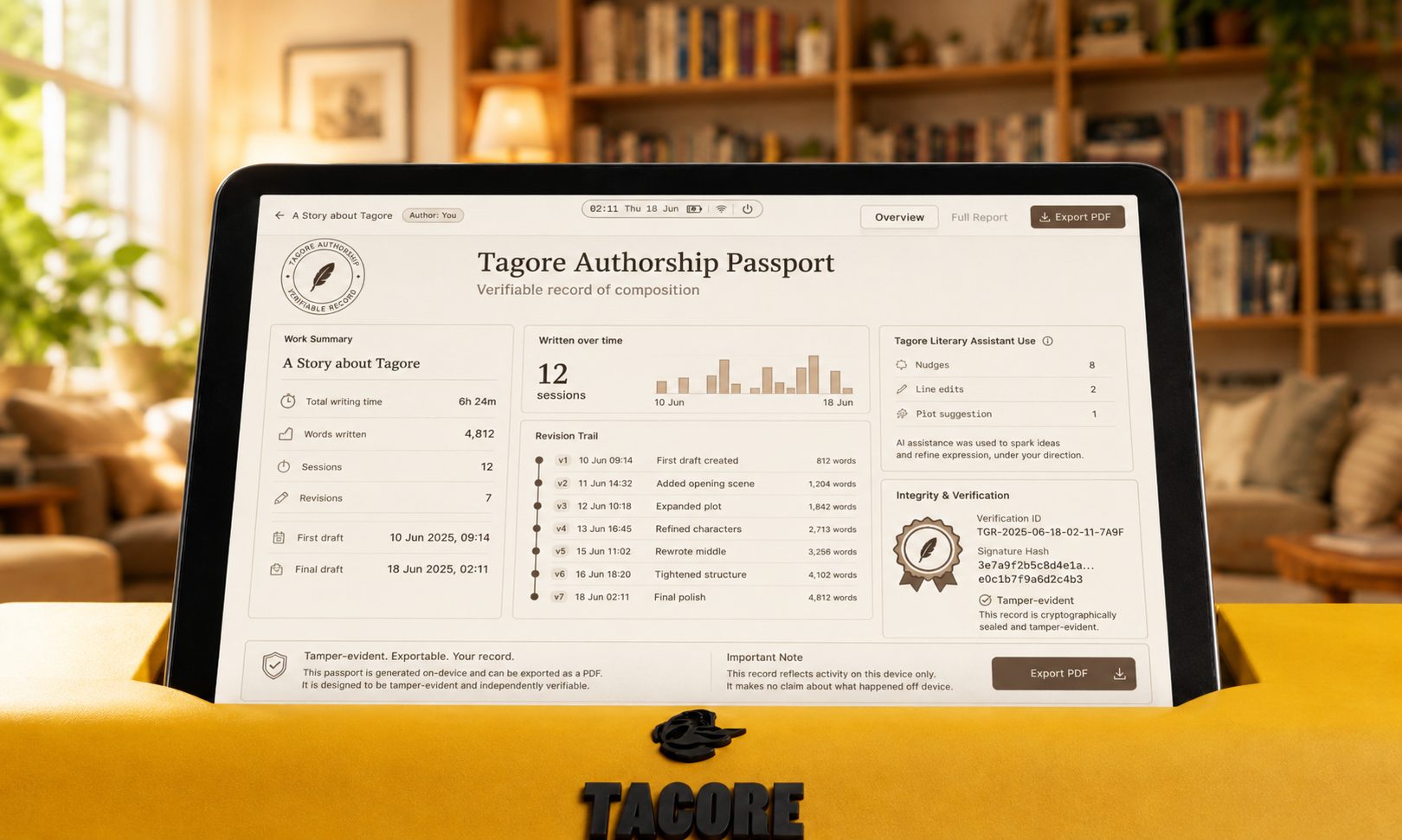
AI detectors get it wrong.
An AI detector only sees your finished work. It cannot see you writing it, so it has to guess. Try guessing yourself.
"The ferry left without her."
Who wrote this line?You had to guess, and so does a detector. Nobody can tell who wrote something just by reading it.
5%
of AI writing was caught by one detector after another app reworded it. Before rewording, it caught 70%.3
So people who did their own work get accused, and people who cheated get away with it.
This affects millions of people.
94%
of UK university students now use AI to help with work that gets marked.5
1 in 10
US teenagers say their own work was wrongly called AI. For Black teenagers it is 1 in 5.6
33.9m
visits in one month to websites that disguise AI writing so detectors miss it.7
6,000+
authors have signed up to label their books as written by a human.8
Writing and copying leave different trails.
Your own writing: you type in bursts, stop to think and delete things.
Copied writing: it goes in at one steady speed, with no stops and no changes.
Looks at the finished work and guesses.
Records you writing it, then shows what happened.
Try it: type a sentence, then paste one in.
Nothing you type here is saved or sent anywhere.
Write
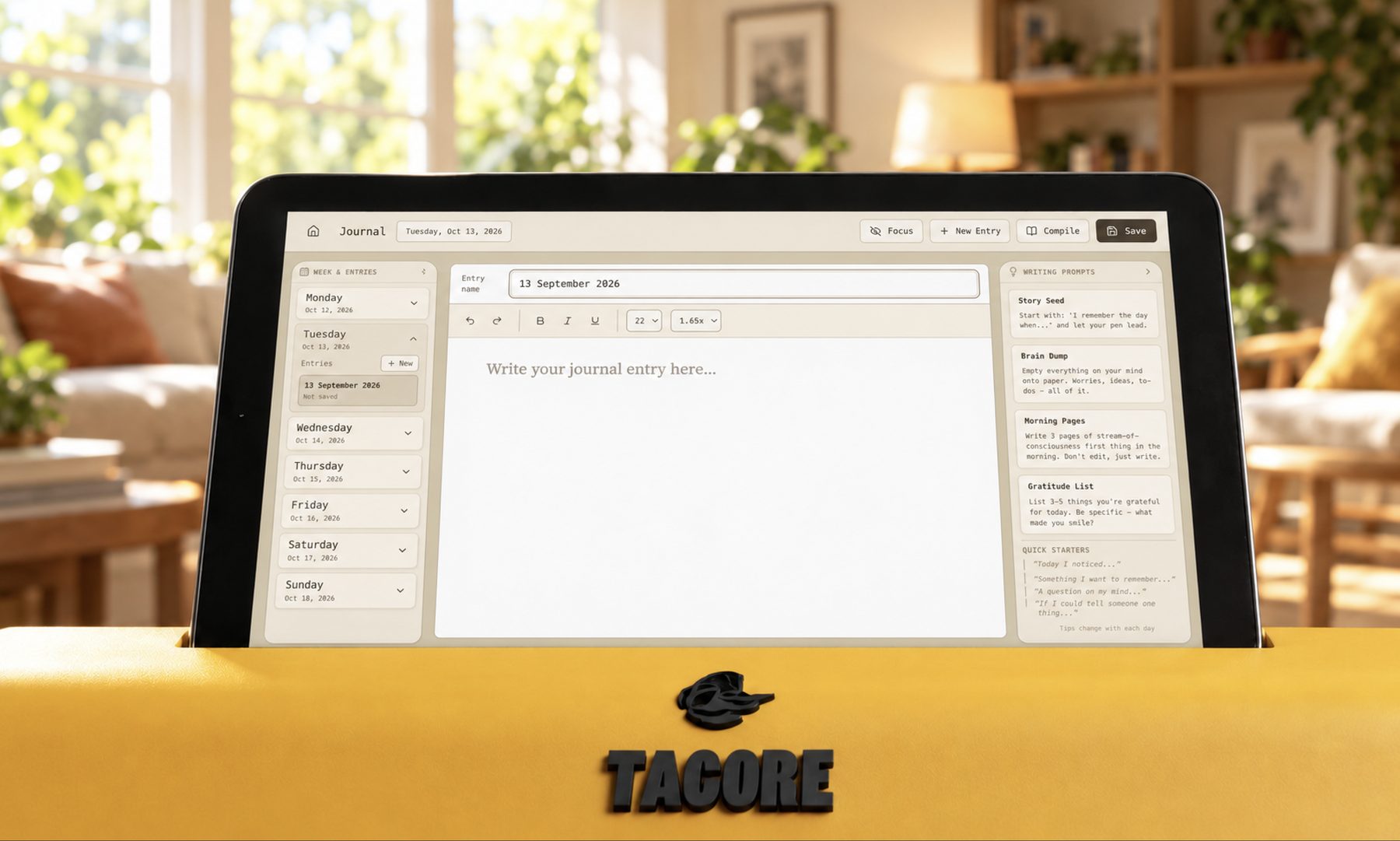
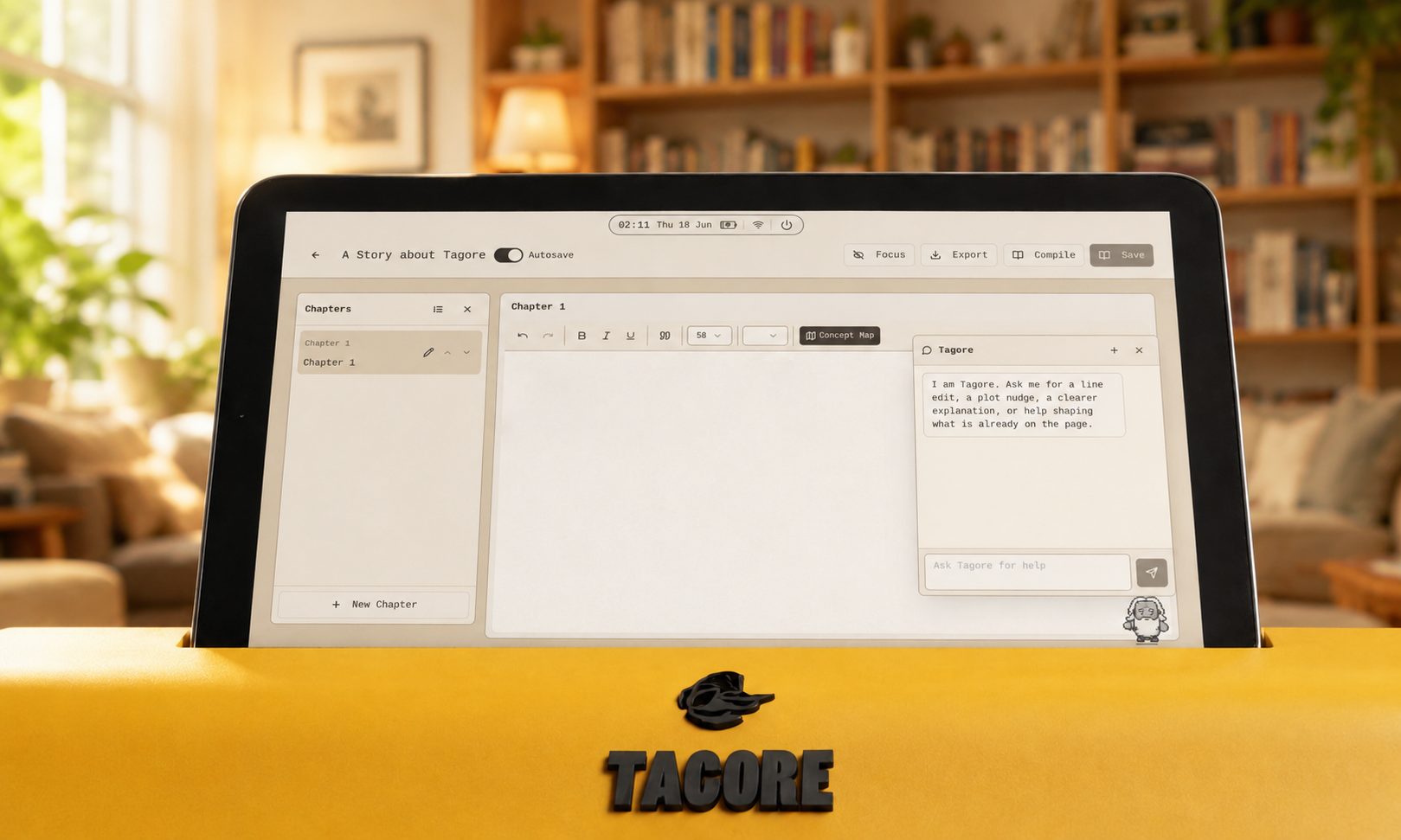
Write in TagOS, which is free on any computer, or on a Tagore.
It records
As you write, the Authorship Passport records what you type, paste, delete and rewrite.
Share it
When you finish, send a PDF report, a Passport ID or a timelapse video to whoever needs proof.
TagOS: free writing software with nothing to distract you.
On a laptop, everything you could be doing instead is one click away. TagOS only shows your work. It also records how you wrote it, because a finished document cannot show that on its own.
- Just Write mode
- Look things up as you write
- No feeds
25 minis how long office workers took, on average, to get back to a task after being interrupted.9
We designed it with authors and academics at Oxford.
The Authorship Passport: a record of how you wrote it.
It runs in the background while you write. It makes ten checks and shows them on one wheel. Green means fine. Orange means take a closer look. Try the three examples, then tap a slice to see what it found.
Tap a slice to see what it found.
Send the full report
A detailed PDF of everything the Passport recorded. It is sealed, so if anyone changes it, it shows.
Or share a Passport ID
TP-8HKQ-M3VD
A short code. Whoever you give it to types it into authorshippassport.com and sees the wheel.
Teachers and publishers: here is how to check it.
Sign in with your university or company account to see every detail.
TP-8HKQ-M3VD
The writer sends you a code like this.
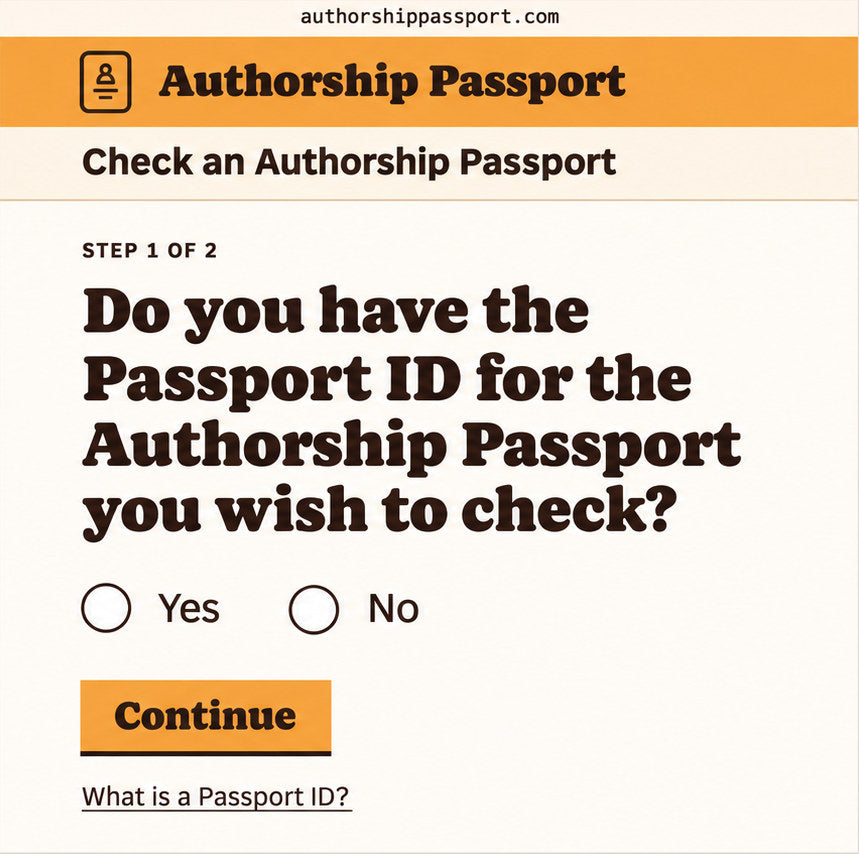
 TP-8HKQ-M3VD
9 of 10
checks pass
See where every sentence came from
Old handwritten manuscripts showed every crossing-out. Typed documents hide them. The Passport keeps them, so you can see where each sentence came from and how it changed.
One sentence, rewritten four times. Every version is kept.
The ferry left without her. She watched it shrink until the gulls lost interest.rewritten 4 times Harbour scene: she loses the suitcase here.pasted, note: my outline The crossing takes fifty minutes in calm weather.matches research The sea was a vast expanse of shimmering possibility.pasted, no note
Then it asks five questions, like an Oxford tutor.
At Oxford, students explain their essay to a tutor, face to face. TagOS does the same. Before it gives out a Passport ID, the Tagore companion asks the writer five questions about their work, each harder than the last. Answers must be typed, because pasting is switched off.
- What is it about?
- Why does it open the way it does?
- What does the third section add?
- What did you cut, and why?
- What is the best case against it?
These are examples. The real questions are based on what was written.
It is the first check, done before a person needs to look. Teachers use it to get students thinking about their own work, and to make cheating with AI harder than doing the work. The ombudsman for universities in England and Wales says questioning like this is a fair way to test understanding.10
Pasted something? Say where it came from.
Every time you paste, the Tagore companion asks where the text came from. You add a short note, and the paste is marked as explained, so nobody thinks you were hiding it.
 Looking it upSaved beside your draft
Look things up without leaving your work.
Ask the Tagore companion a question. It finds the answer and saves it next to your writing, so you never open a browser. It never writes anything for you.
Turn your work into a timelapse video.
Export your essay, novel or dissertation as a video that plays back every word being written, first to last. Share it to show the work is yours. Drag the slider to try it.
Tagore: the strongest proof of all.
Tagore is a modern typewriter with no browser and no apps, so nothing can distract you. Every Passport made on a Tagore carries a code from that one machine. It is the ultimate proof that no AI wrote your work.
- No browser
- No apps
- No AI disguise apps
- Every import recorded
On a laptop, apps can fake human typing. One lecturer watched an app spend 3 hours 31 minutes typing a ChatGPT essay into Google Docs, complete with pauses and typos.11 Tagore cannot run apps, so this cannot happen.
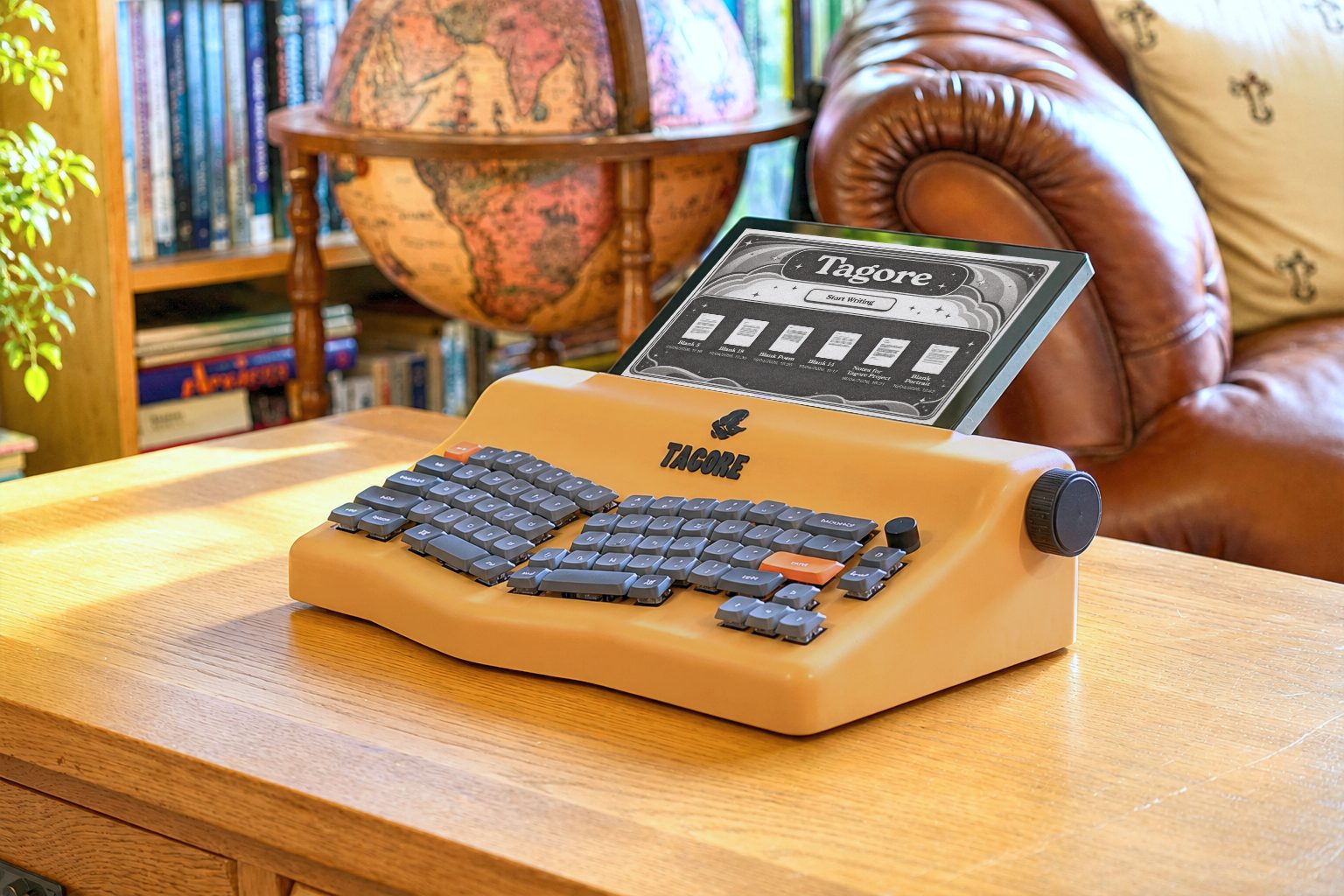
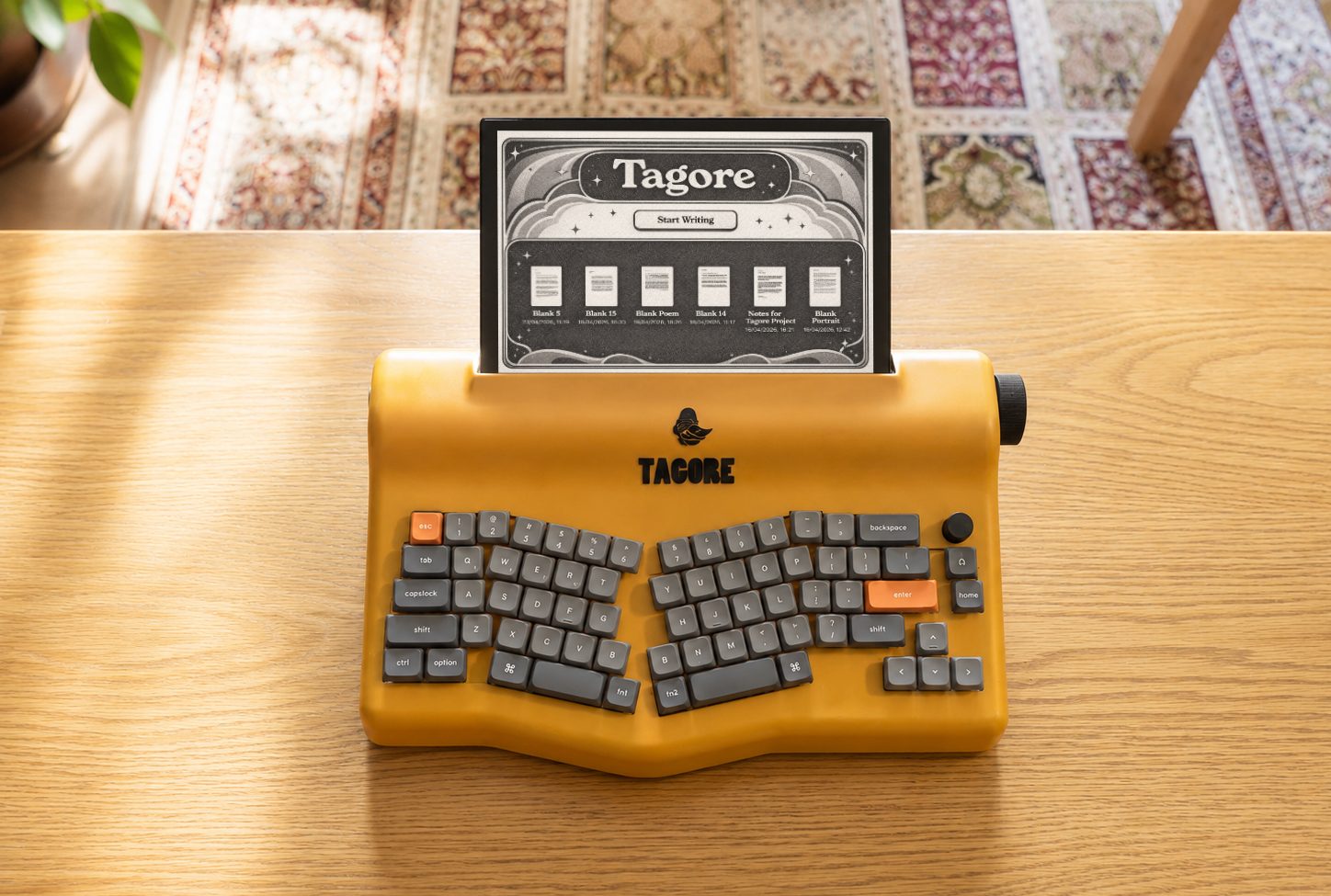
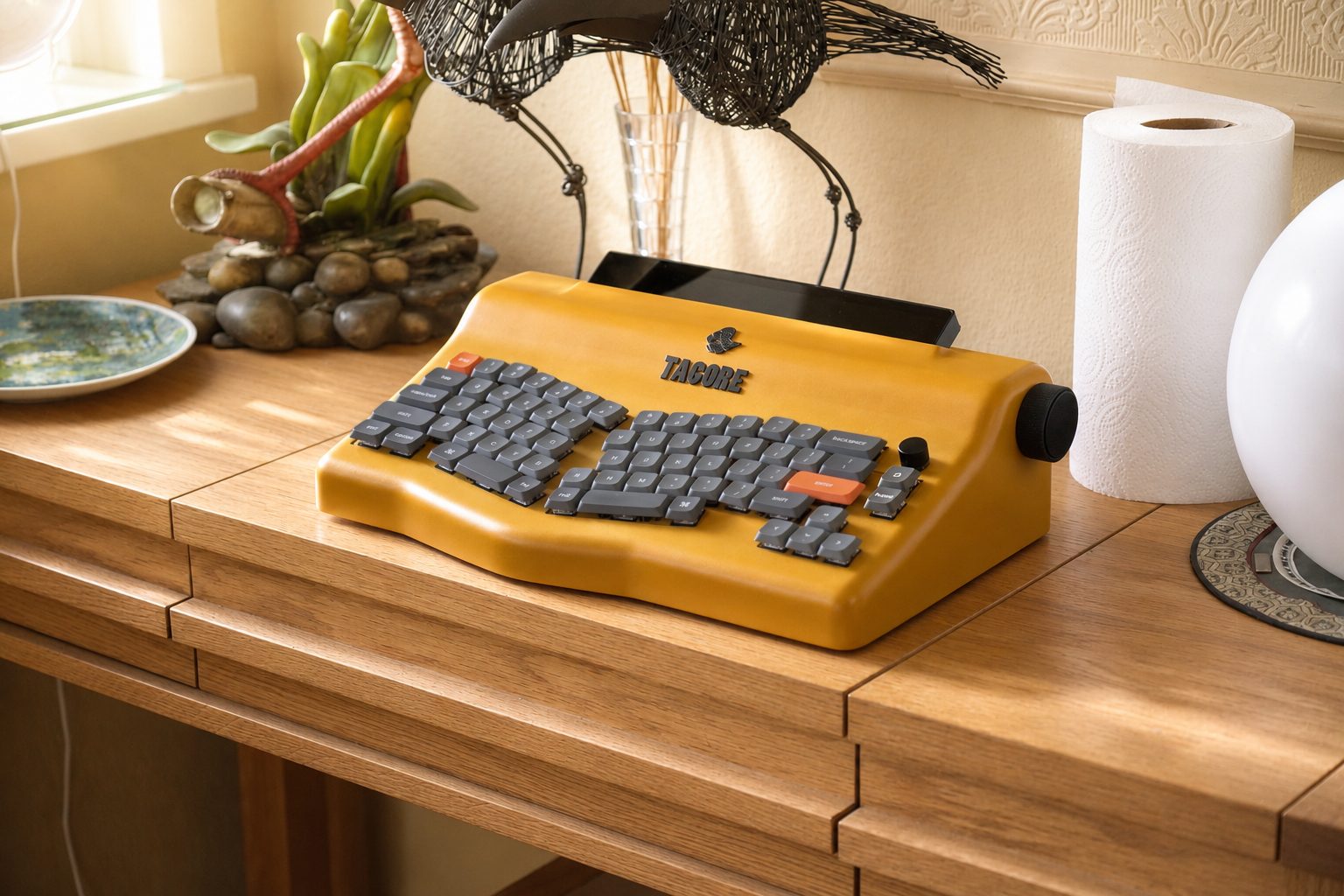
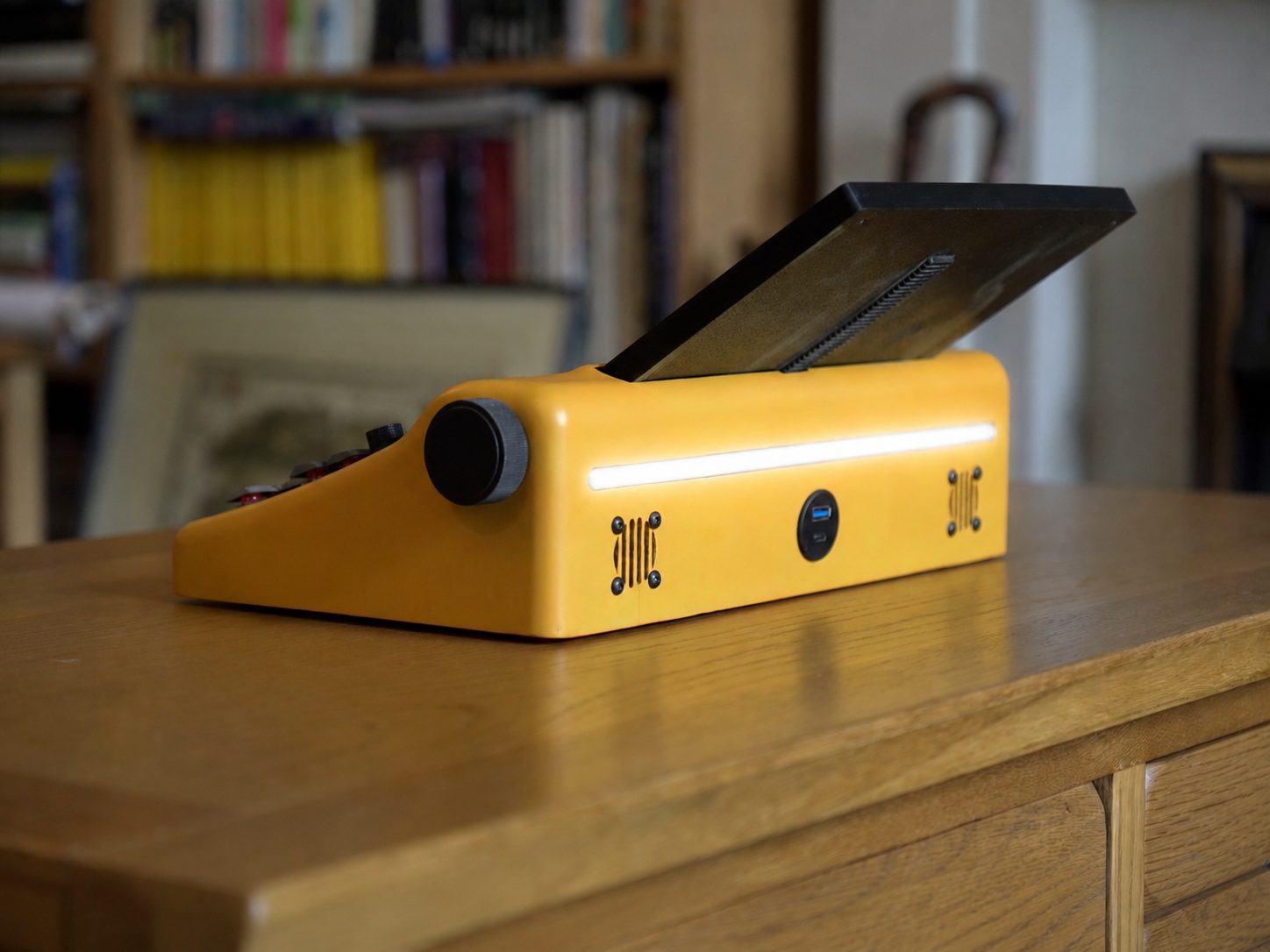
Tap a photo to see it bigger.
Who is it for?
Universities and schools
Get evidence you can actually read. In England and Wales, the university has to prove a student cheated, not the other way round.10
Check a PassportPublishers and agents
Know how a book was written before you sign it. In 2026, Hachette cancelled a novel over fears it was written with AI. The author says it was not.12
Check a PassportSources
- Liang and others, GPT detectors are biased against non-native English writers, Patterns, 2023.
- OpenAI, New AI classifier for indicating AI-written text, withdrawn July 2023.
- Krishna and others, Paraphrasing evades detectors of AI-generated text, NeurIPS 2023.
- Scarfe and others, A real-world test of artificial intelligence infiltration of a university examinations system, PLOS ONE, 2024.
- HEPI, Student Generative AI Survey 2026.
- Common Sense Media survey, 2024, reported by Education Week.
- NBC News, To avoid accusations of AI cheating, college students are turning to AI, 28 January 2026.
- Poets & Writers, The Authors Guild Confronts AI, September/October 2026.
- Mark, Gonzalez and Harris, No Task Left Behind? Examining the Nature of Fragmented Work, CHI 2005.
- Office of the Independent Adjudicator, casework note on AI and academic misconduct, 8 July 2025.
- Susan E. Ray, The Next Wave of AI Cheating Technology, The Chronicle of Higher Education, 12 August 2026.
- TechCrunch, report on the cancelled novel, 21 March 2026.